slob tags

slob music

slob ads

Monday, April 2, 2007

DRM-free music from EMI

Alright. I'm not a Steve Jobs fanboi. I'm just not. I love Apple's products; I hate Apple's pricing; I don't mind iTunes DRM because I use an iPod. But I get it. DRM sux0r and all that.

So it's a pretty big deal that EMI (one of the Big Four) is dropping DRM from all of their digital offerings. You know, just like when you buy a CD. It means a lot for digital content distribution. iTunes users can put their music on the Zune. Of course, Zune users can just buy it from the Zune store, but they'd have the option of putting on an iPod. You get the picture.

But the real reason this is a big deal has nothing to do with devices. It has nothing to do with El Jobso carefully dodging European litigation. It means that someone in the music industry, somewhere, has finally figured it out. Whether or not Steve had any effect on the eventual decision, EMI has finally agreed that the people who buy music online are more interested in paying for a product than pirating it:
Q: Is this a green light for piracy?
Eric: no, we take the view that we have to "trust consumers." Some will disappoint us. The idea is to give them the best music experience to grow sales and not diminish them.1
This is a big deal because someone, somewhere, finally got it right. Now we'll see if the rest falls into place.

Labels: , , , , ,

muji coming to america!

Muji, the Japanese small-box retailer of high-design, low cost household products, furniture, and other fun stuff, is finally coming to the United States. The company's full name, Mujiriushi Ryohin translates to "no-brand quality products," and indeed, all of Muji's products are unbranded (which, it could be argued, is a brand in and of itself).

According to BusinessWeek:
[Muji's] post-industrial designs tap into the less-is-more esthetic visible in Japan's temple gardens and haiku. Larger Muji outlets carry more than 7,000 products that run the gamut from $4 striped socks to a $1,170 front-loading washer-dryer combo. There's even a line of prefab houses that start at $115,000.
Many of Muji's items also come from recycled materials, such as the cute stuffed bunny pictured here. Muji will have outlets in 35 countries once it opens its 5,000 sq.-foot outlet later this year in--you guessed it--New York City. Stores in Boston, Chicago, and San Francisco may follow. Expect to see many SoHo apartments mixing and matching Swedish particle board aesthetic with Japanese Zen.

via BusinessWeek Online

Labels: , , ,

Wednesday, March 28, 2007

weighing in on the sirius / xm merger

Man, it can be hard to keep your head above water. You’ve got lobbyists complaining to the SEC, the FCC complaining that the sat radio licenses are (already!) being violated, the National Association of Broadcasters running copyright-infringing advertisements about anti-trust infringing mergers, and advocates on both sides screaming “pork!”

So what’s the question behind the Sirius/XM merger? It’s simple, really. Here’s how it boils down for the consumer (you, me; you know, most of us):
  1. Ballyhoo! The merger will create a monopoly on sat radio and allow Sirius/XM to increase prices and ignore the consumer’s implicit “rights” (in all such cases of consumer-scare-ism, “rights” translates to “low prices”).
  2. Huzzah! This way, Sirius and XM will standardize the industry and combine their programming (football and baseball on one device, wow, damn!). How could it go wrong?
Sigh. Like I said, this is a confusing situation. Personally, I find myself on the side of Ballyhoo!, for what I think are good reasons.

First, this will be creating a monopoly. There’s no two ways about it. I’ve seen arguments trumpeting terrestrial radio as a competitor of satellite’s, but the difference in technology, delivery, and, most importantly, advertising makes comparisons between the two an apples-to-oranges job; the kind of punditry reserved for CNN or Fox News. I’d like to ask users of sat radio to head back to the old days of terrestrial broadcasts for one commute, and then tell me it’s the same industry. Same thing goes for MP3 players or internet radio. There appears to be some confusion between “listening to things” and “market.”

So monopoly it is. While this doesn’t immediately bode poorly for those of us who already use one of the services, I don’t need to tell you about its potential. A big part of this country’s history is antitrust litigation; you’ve all heard about it, and whether or not you agree with it, it’s all about protecting your “rights.” Matters of principle aside, this merger holds real threats, especially to the SEC who will later be tasked with breaking everything apart again, just like those FCC licenses said should happen.

Second, this will standardize nothing. The industry will eventually develop another competitor, either when the SEC smacks it down or when Rupert Murdoch blesses someone’s coffers with enough cash money to overcome what will be a MASSIVE barrier to entry. Meanwhile, Sirius/XM will have standardized their own proprietary technology (whoo). Standardization is not something that comes from one place, since it initially reduces potential profit for all of those proprietary monsters out there (hello, Sony? Listen up, m’kay?). It has to happen when an industry isn’t syncing the way it should be. This industry will have no one left to sync with.

Finally, competition is good. How very un-revolutionary. But the reason prices have stayed low is that even the sat radio Oligarchy of Two couldn’t risk inflating prices. That one hasn’t massively undercut the other and pushed them out of business is surprising, but also illegal so I guess that makes sense for now.

And that’s what I think. I like pretending to be an expert.

Labels: , , , ,

Friday, March 23, 2007

un airbus a380 en 7 minutes

Apparently, you can actually build an airplane in 7 minutes--in French. Here's the video of Airbus's new monstrosity that made its debut in North America this week. The behemoth is "as tall as a seven-story building, roomy enough to fit 70 vehicles on its wings, as heavy as 500 Volkswagen Golfs and big enough to carry 35 million ping pong balls." Yeah, but Boeing 747s are big enough to take out a 110 story building. Too soon?


[via Gridskipper, The Lede]

Labels: , , , , ,

Wednesday, March 14, 2007

oriental virgin

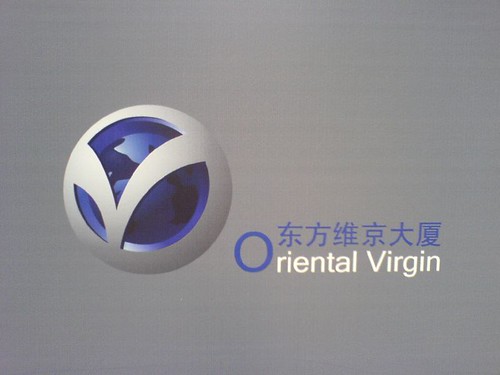
Take a look at this logo photographed by John at Sinosplice from the side of a Shanghai construction site:


Oriental Virgin. Brilliant. I won't even make the jokes. John points out that this sign, aside from being hilarious, is an obvious knock-off of the Sony Ericsson logo. Clever marketing, Chinese company.


Writes John:

Apparently the recipe for their English name and logo went something like this:

    1. Take a successful foreign company’s name and add “Oriental” to the front. Base the Chinese name on the English name.
    2. Copy the logo of a different company, altering it a bit.

Everyone knows Chinese companies never steal the ideas of others or anything dastardly like that. This must be the rare exception to the rule.

Labels: , ,

Thursday, March 8, 2007

the fcc, letting us be?

In the same week that the FCC announced that Clear Channel, Citadel, and others would pay a settlement to end the payola scandal that has plagued commercial radio, another side deal was made.

Independent of the government's ruling, major radio corporations struck a deal with independent music spokesgroup American Association for Independent Music (A2IM, a sweet acronym) to allot airtime for indie bands. Clear Channel and friends will now set aside 8,400 half hour blocks for our little unknown friends thus flipping the the entire music industry on its head, baffling indie bands and their labels, and freaking out scenesters worldwide.

Now this begs a few questions:

1. What's an indie band?
2. Will indie bands get indie-er to avoid major radio play?
3. Will non-indie groups get indie-er to receive more gauranteed radio play?

We'll have to wait and see, but until then, I'm going to have to find all sorts of new ways to up my indie cred.

(Sourcess: ABC News, Spin)

Labels: , , , ,

Wednesday, March 7, 2007

nau is the time

After much delay, Nau has finally launched its official webstore and the new company is "open for business unusual," as the index page reads. Nau's clothing line attempts to blur "urban endeavor and backcountry" while simultaneously melding "beauty, performance, and sustainability." The company is working to develop myriad new fabrics to achieve these ends. Much of their clothing is made from organic cotton and recycled synthetics. The clothing is highly functional--much of it is stretchy, fitted, and water and wind resistant. Nau will be opening four retail stores in CO, OR, WA, and IL. Rumor has it, these stores will be "webfronts" places for customers to try out clothing, but customers will be encouraged to order clothing from the webstore to cut down on the company's carbon footprint (doesn't that mean more shipping? I guess we'll see how this works in real life).

With Nau's extensive use of sustainable and psuedo-sustainable fabrics (I'm sure recycled polyester involves extensive chemical processing to produce), their product line is perfectly situated to take on earth-concious labels like Patagonia and Edun. But unlike Patagonia, Nau doesn't advertise your eco-awareness so readily and would thankfully look out of place at a Yonder Mountain show. At the same time, the clothing is designed to take you from your favorite fair-trade coffee shop to a Big Sur bouldering trip or even your weekend in the backcountry. The clothing is clearly targeted at the young, urban, tech-savvy, yoga-practicing, Prius-driving, Whole Foods customer, a target market that is unfortunately devoid of a good moniker except for the tired term "yuppie".

The clothing will also be a hit with the virtually untapped flashpacking market, as the clothing appears to be lightweight, easily packable, odor resistant (merino wool is, anyway), and wrinkle resistant (anything with high polyester content). But so is GoLite. The key with Nau is that the clothing doesn't wear its technical features on its sleeves (get it?). You can wear Nau while hiking around Chiang Mai and leave it on when you go out to Bed in Bangkok without looking like a member of the sandals-and-socks crowd.

Nau has a lot of growth potential and should be a brand to watch over the next few quarters. The company is committed to social and environmental change through business and may find itself at the forefront of the social business movement. The one prohibitive factor is cost--Nau isn't cheap--but Nau's target market has generally shown a propensity to pony up for well-designed, value-added products, especially products fitting their social values. Furthermore, as the inevitable competition arises, the supply of sustainable fabrics should increase, bringing prices down. Who knows--maybe someday we'll all be able to recycle or compost our shirts.

More: check out Nau's blog, The Thought Kitchen.

Labels: , , , , , , ,

Friday, March 2, 2007

project (red)...so, how's that going?

In 2006, Bono and Bobby Shriver created the (RED) campaign to raise money for the Global Fund to Fight Aids, Tuberculosis, and Malaria. The initiative (the campaign insists it's a brand, not a charity) teamed up with a bunch of major international firms that agreed to design, market, and sell (RED)-branded products. Portions of the companies' pre-tax profits are then channelled to the Global Fund. Current corporate partners include American Express, Converse, Gap, Emporio Armani, Motorola and Apple. So if you buy a (RED) iPod or (RED) panties, Apple or Gap will respectively give some money to the poor Africans who can't afford either item.

(RED) has been hailed as a creative, market-based solution to financing the Global Fund. Theoretically, the campaign could raise serious money for the Global Fund as long as partner companies' bottom lines are continously met. As Shriver told the New York Times in 2006, "We want [our partner companies] to make money. We don’t want anyone to be thinking, ‘I’m not making money on this thing,’ because then we failed. We want people buying houses in the Hamptons based on this because, if that happens, this thing is sustainable.” The campaign raises money by playing off of the self-interest of corporations and the vanity of consumers (perhaps (RED) phones will be the new LiveStrong bracelets?). Furthermore, consumers do not have to change their behavior--they're already buying iPods, phones, and sneakers. Why not buy the (RED) ones and give money to charity without having to actually donate money ? Capitalism at its finest.

On the other hand (RED) also has it's share of critics. Recently, WPI launched BUY (LESS) CRAP, a campaign aimed at "rejecting the ti(red) notion that shopping is a reasonable response to human suffering." According to Ann Handley,

WPI founder Ben Davis says his big beef is that the donations aren't transparent: "When donations are based on percentages of profit and the accounting methods are not transparent, you can spend $100 on a (RED) product with the notion that you're helping to save lives in Africa—but there is no assurance that any of that $100 will actually reach the cause. Not one (RED) cent."

According to Project (RED), the campaign has raised over $20 million for the Global Fund, certainly a substantial amount of money that may go a long way in the developing world. At the same time, that sum pales in comparison to the $100 million that that Davis reasonably projects must have been spent by (RED) partner companies on marketing since the project's inception.

It appears that (RED) partner companies' marketing budgets probably could have gone further if the companies just donated the money directly to the Global Fund. What remains to be seen, however, is whether or not (RED) will gain enough momentum to be a sustainable source of finance for the Fund. (RED), therefore, needs to snowball into a trend, or it will be a wasted effort. One of the largest problems facing (RED) is the fact that consumers don't seem to assosciate it with a cause. There simply isn't enough buzz, and the marketing doesn't really provide consumers with any information about the HIV/AIDS pandemic or the Global Fund. Most (RED) television spots only point to the cryptic joinred.com link, and as Seven87 points out:

The joinred.com link doesn’t even talk about the issues, it just has a sparse page with the 6 RED branded products. The “Manifesto” has an overview, but only the “Global Fund” link has any info on the issues… A single page with the issues. Even the information design of the animation with drill down data was not as compelling as it could be.

Perhaps they didn’t want to go overboard on the scary/sad messages, but it still seems rather underwhelming. They really aren’t educating anyone. They aren’t even playing the “ace card” that charities have… emotional and guilt triggers.

Finally, (RED) products just aren't that cool. Advertising your charitable inclinations is simply not trendy. Consumers are searching for products that are their social values (ie: Toyota Prius, American Apparel), not just branded to represent their values. Perhaps (RED) is just too much like it's creator, Bono. Cool for awhile, but ultimately overly persistent, lacking in substance, and not something that hip people would be caught dead assosciating with.

Labels: , , , , ,

Wednesday, January 17, 2007

new york times stoops to cover nascar

The New York Times, usually a bastion of eastern elite liberalism, reports on Toyota's entry into Nascar, the people's sport. Toyota, the first foreign-owned company to enter cars into stock races since Jaguar in the 50s (unless you count DaimlerChrysler-owned Dodge), has come under criticism for being unAmerican. Toyota fired back, pointing out that: "Camrys are built in the United States, the Ford Fusion is produced in Mexico and the Chevrolet Monte Carlo comes from Canada." Toyota will in fact be racing tricked out Camrys. Perhaps they would do better racing those Scion wheeled boxes--judging by the commercials, they're really easy to modify.

Toyota has also been accused of buying up the best drivers, engineers, mechanics, and support staff--much the same way the New York Yankees (and now the Chicago Cubs) go about baseball. Toyota is poised to overtake GM as the world's largest car manufacturer in 2007. They may also be seeking to push the ailing Ford Motor Company out of Nascar.

New York Times: Checkered Flag, or Red Flag?

Labels: , , , , ,

Saturday, January 13, 2007

my favorite time of year is saturday

So who saw the iPhone? It's pretty sweet huh? I was going to write something telling what it's good about and what's bad. Standard technoblogger babble, but instead I'll let you in on a little secret, you might be able to make a few bucks off it. Some of you more ardent internet technology skateboarders have surely read about the iPhone's impact on other companies and the minute by minute changes in stock prices of Apple, Palm, RIM, and Motorola as Jobs was performing on his little song and dance. Then again, some of you might not. So that's why I just told you. Next time the Wall Street Journal (and no one else save maybe David Pogue) says something with apple is going to happen, bet some money that it does, and then think about whose products will suck in comparison to the new "it" product that apple will unveil and bet against them. Then wait literally 2 hours, close out your positions, and you should have enough cash to afford whatever ridiculous device apple unveils. And if you're feeling extra saucey go to the local casino and put $20 on red 26. GO BEARS!!!!

Labels: , , , , ,